

Project Description
OPENING THE EDGE
RECLAIMING AN ALIENATED PUBLIC HOUSING LAWN THROUGH COMMUNITY-LED LIGHTING DESIGN
ROLE: LIGHTING DESIGNER / COMMUNITY DESIGN COLLABORATOR
LOCATION | YEAR: NEW YORK CITY | 2025
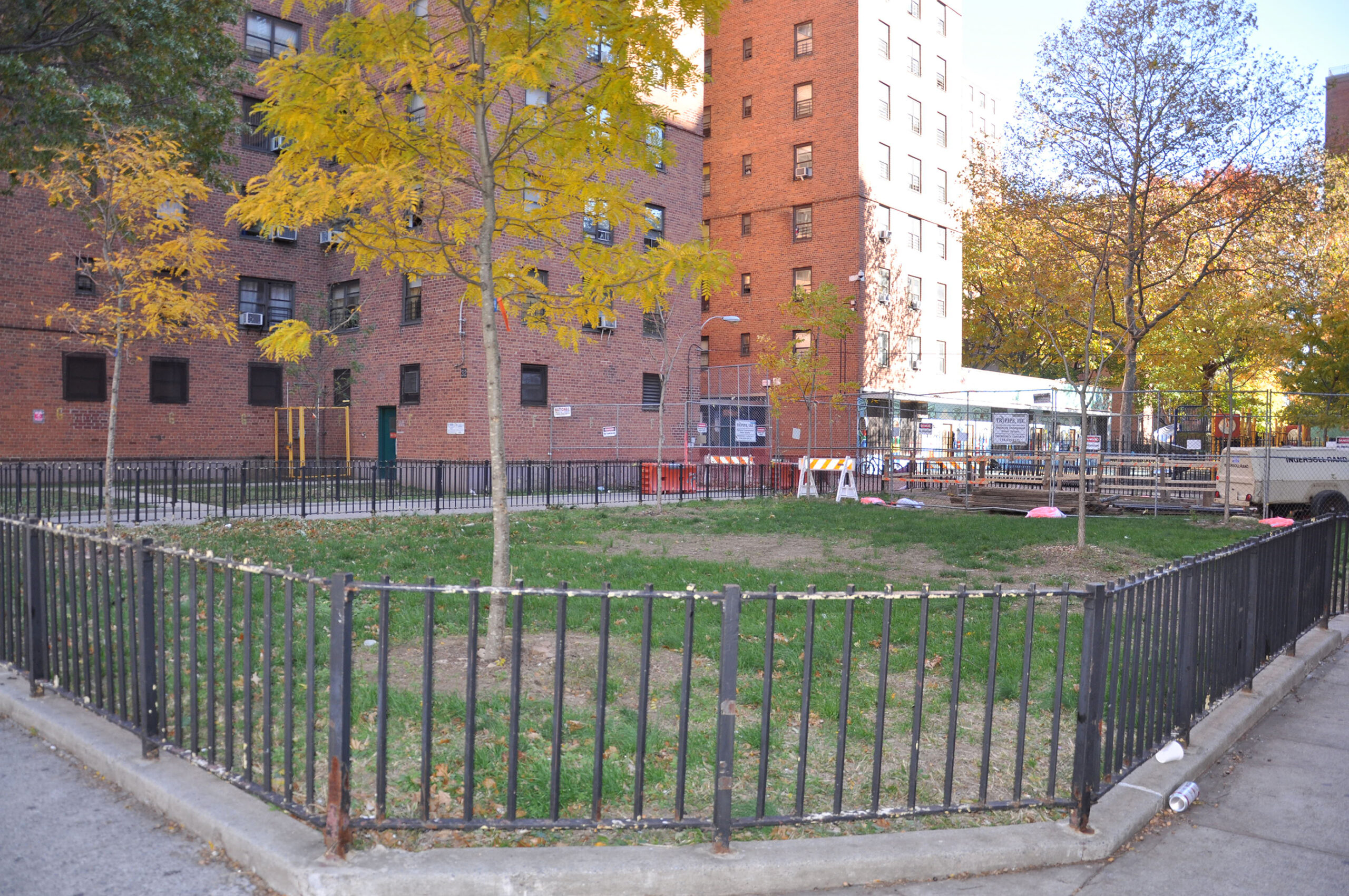
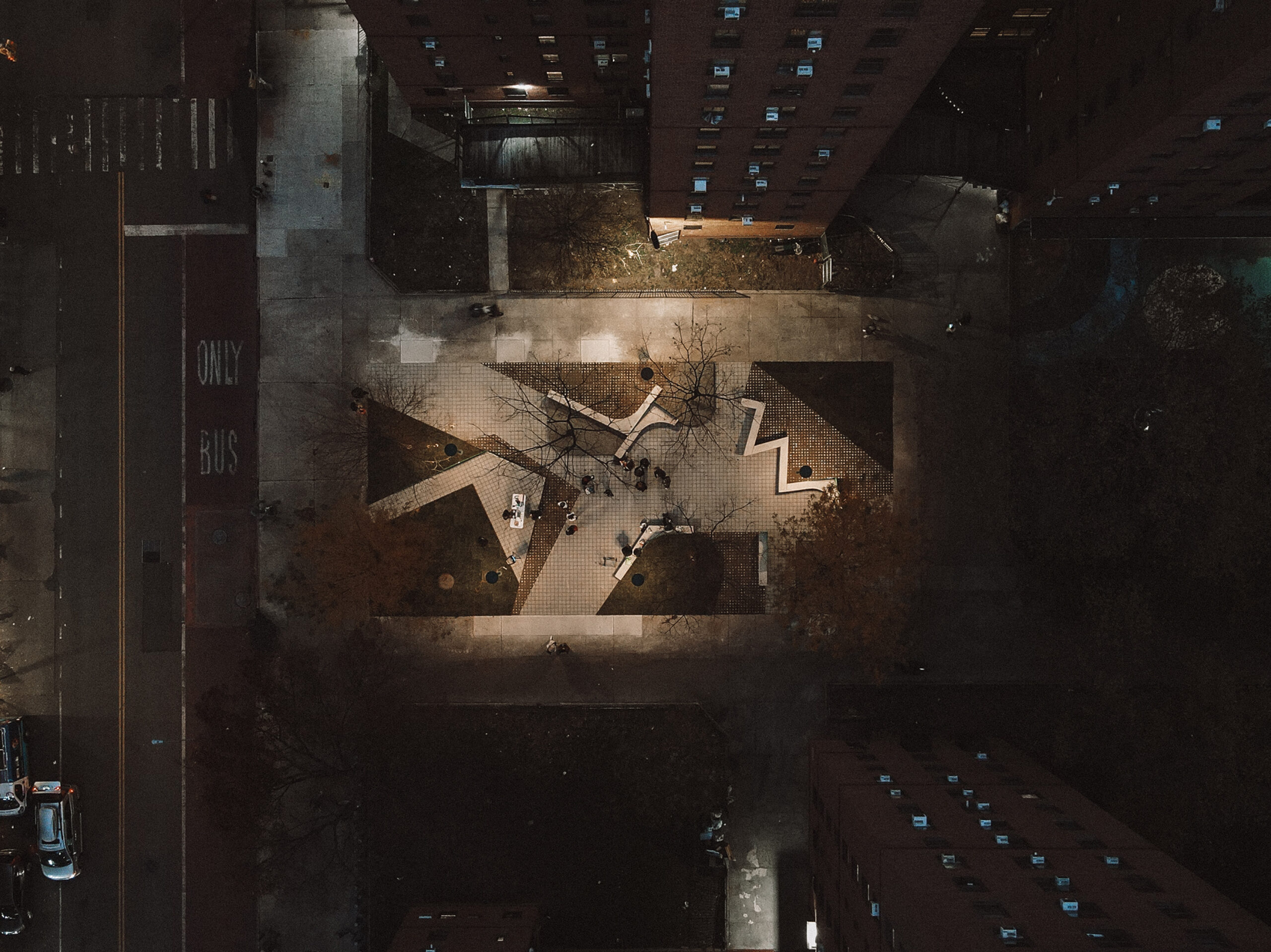
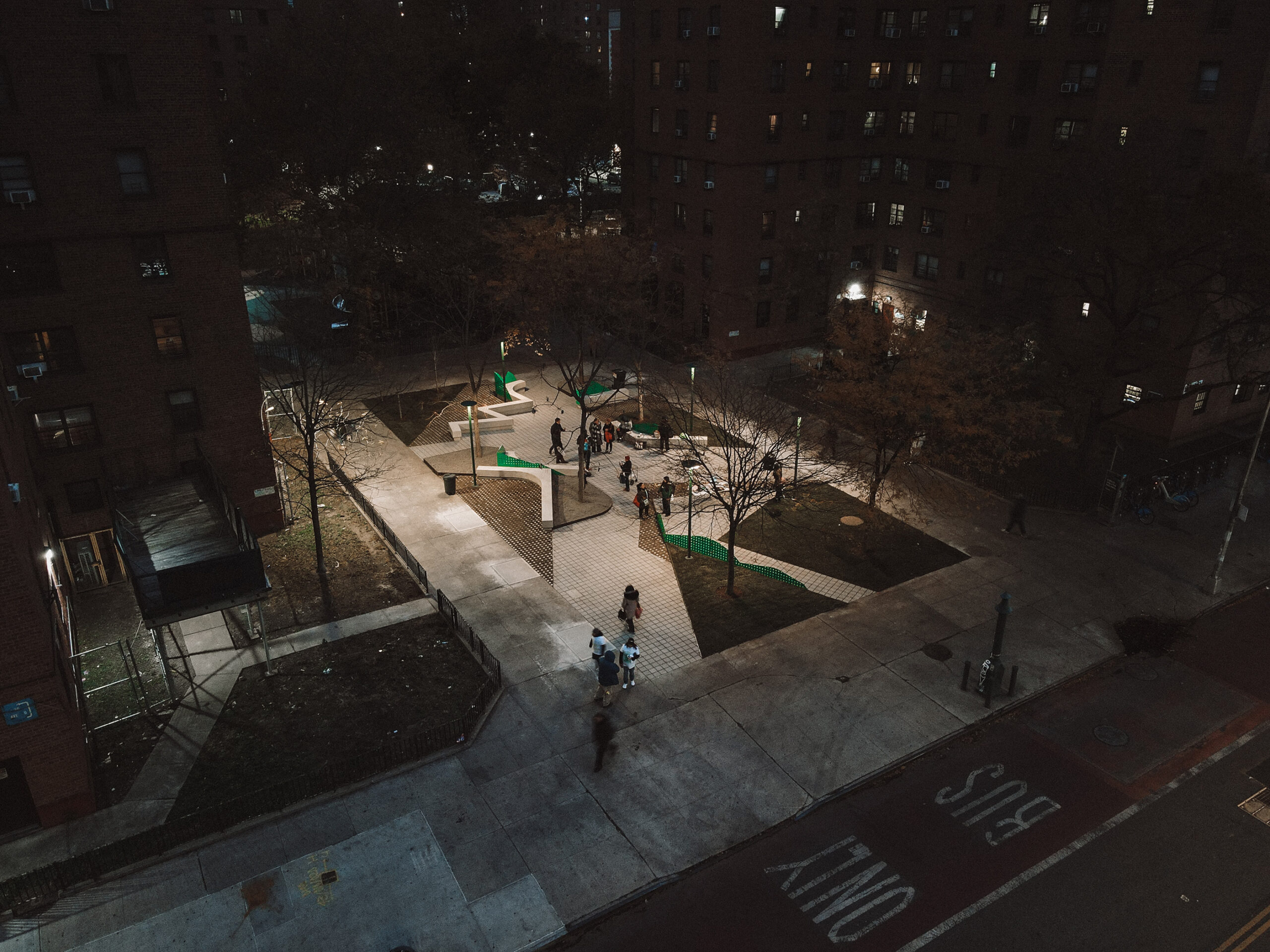
Opening the Edge is a public space transformation that demonstrates how modest, carefully calibrated design can reclaim alienated land, support dignity after dark, and strengthen community life. What was once a fenced, unused lawn within a New York City public housing campus is now an open, welcoming plaza shaped directly by residents and actively used at night. With only five luminaires and a decade of collaboration, the project shows how lighting can function as social infrastructure rather than decoration.
Across New York City, fenced lawns in public housing developments are common. Though labeled as green space, they often create physical and psychological barriers, signaling exclusion rather than care. At this site, a 4,000-square-foot lawn sat between a brightly illuminated avenue and nearly unlit residential pathways. The project set out to remove both the fence and the fear associated with the space, using light to support everyday use without overwhelming the environment.
The site presented overlapping technical and social challenges. Extreme contrast between surrounding light levels made nighttime adaptation difficult. Housing authority standards imposed strict illumination requirements alongside limited capital and operating budgets. Underground utilities and recurring flooding constrained fixture placement, while nearby apartments required careful control of glare and light trespass. Equally important was the social task: translating resident priorities – openness, safety, and belonging – into lighting strategies that felt calm, legible, and human-scaled.
Beginning in 2015, designers met regularly with residents at the local NYCHA community space, often over shared meals (pizza and empanadas) and across many languages. These meetings emphasized listening rather than leading. Over time, volunteer residents became co-designers, helping define priorities and review design iterations. While specific details evolved over nearly ten years, the community’s core values remained constant and guided every decision. Lighting was treated not as a technical overlay, but as a social tool that could support daily life and long-term stewardship.
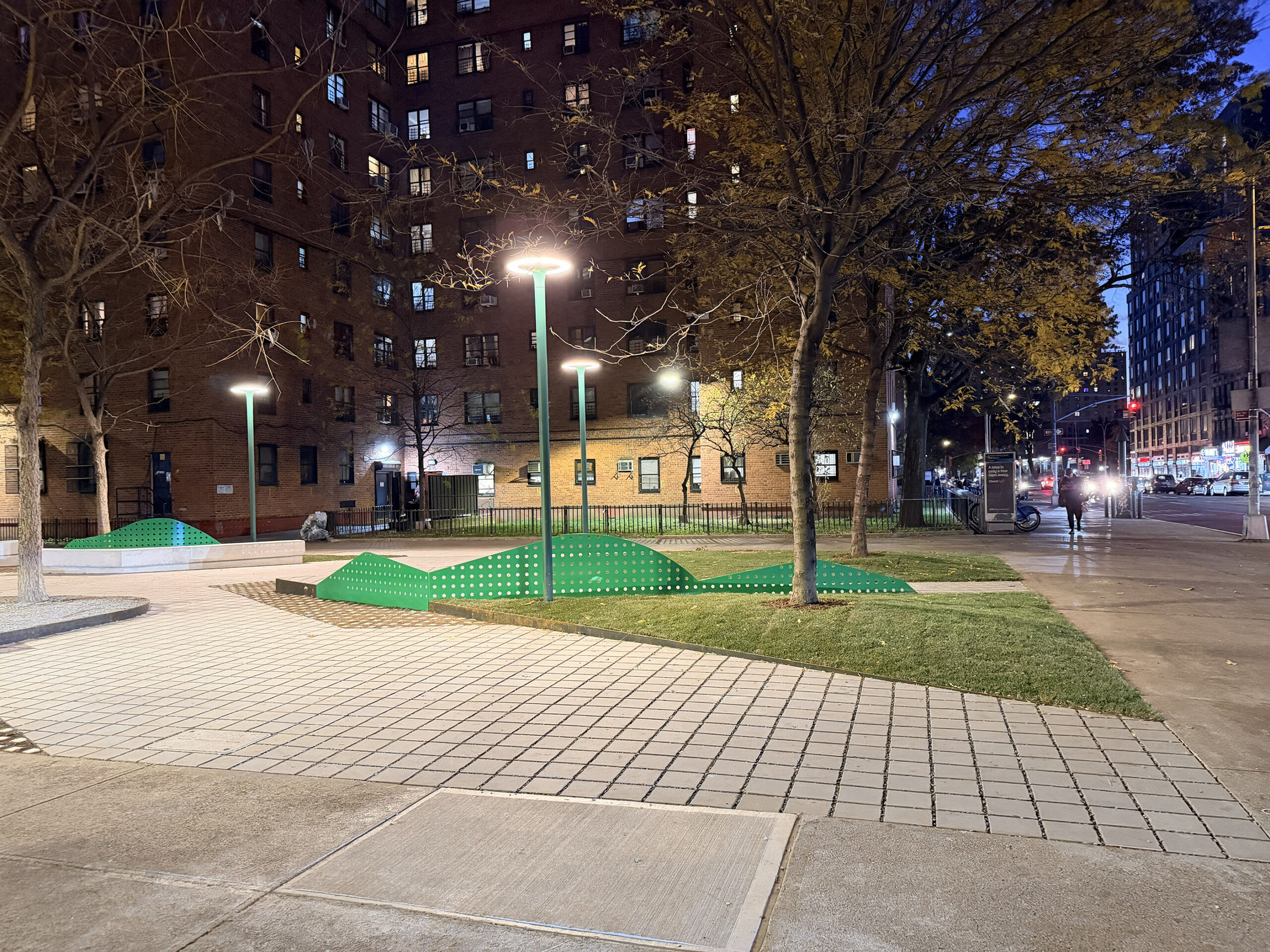
On-site measurements confirmed almost no existing horizontal or vertical illumination in the existing pathways. Rather than simply increasing brightness in the zone of the plaza, the lighting strategy focused on transition and comfort. Low-contrast illumination gently bridges the conditions between the bright avenue and darker interior paths, creating a welcoming nighttime environment without glare. Luminaires are aligned with pedestrian desire lines, seating, and landscape elements to support intuitive movement and lingering. Warm-color LEDs and night-sky-conscious optics limit blue light, preserve views, and maintain clear sightlines across the plaza. During the day, the minimal fixtures reduce visual clutter and allow the space itself to remain primary.
With only five luminaires serving the entire 4,000-square-foot plaza, the design achieves an average horizontal illumination of one footcandle, meeting housing authority criteria while minimizing glare, light trespass, and sky glow. Simple, durable fixtures and a straightforward time-clock control synchronized with daylight hours reduce cost, maintenance, and operational complexity. The most transformative design move, the removal of the fence, reinforces a central lesson of the project: strategic restraint can outperform large budgets.
Since opening in November 2025, the plaza has been actively used after dark for circulation, rest, informal gathering, performances, and play. Despite the season, residents immediately began occupying the space at night, demonstrating the effectiveness of the lighting in supporting comfort and safety. At the opening celebration, community members symbolically cut a “fence” ribbon, marking the realization of ideas shaped through a decade of collaboration.
Opening the Edge now serves as a replicable prototype for public housing open spaces. Housing authorities from multiple cities have visited the site to explore how community-centered, lighting-driven strategies can transform underused land. The project illustrates that lighting, when rooted in resident leadership and applied with precision, can reclaim space, build trust, and strengthen neighborhood connections long after sunset.
See more information at Design Trust for Public Space.
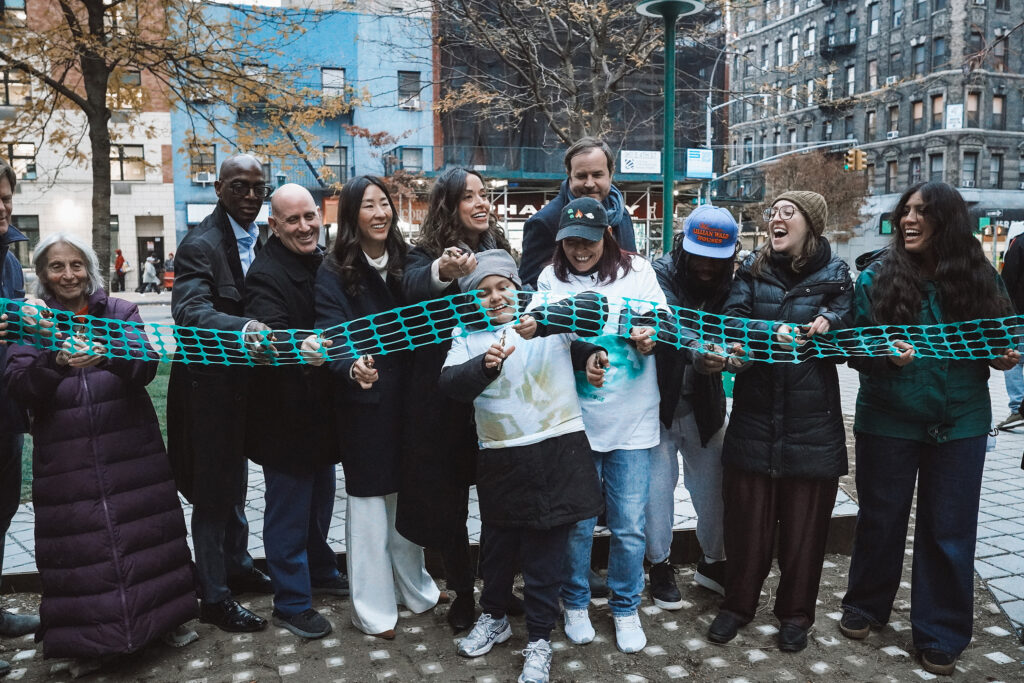
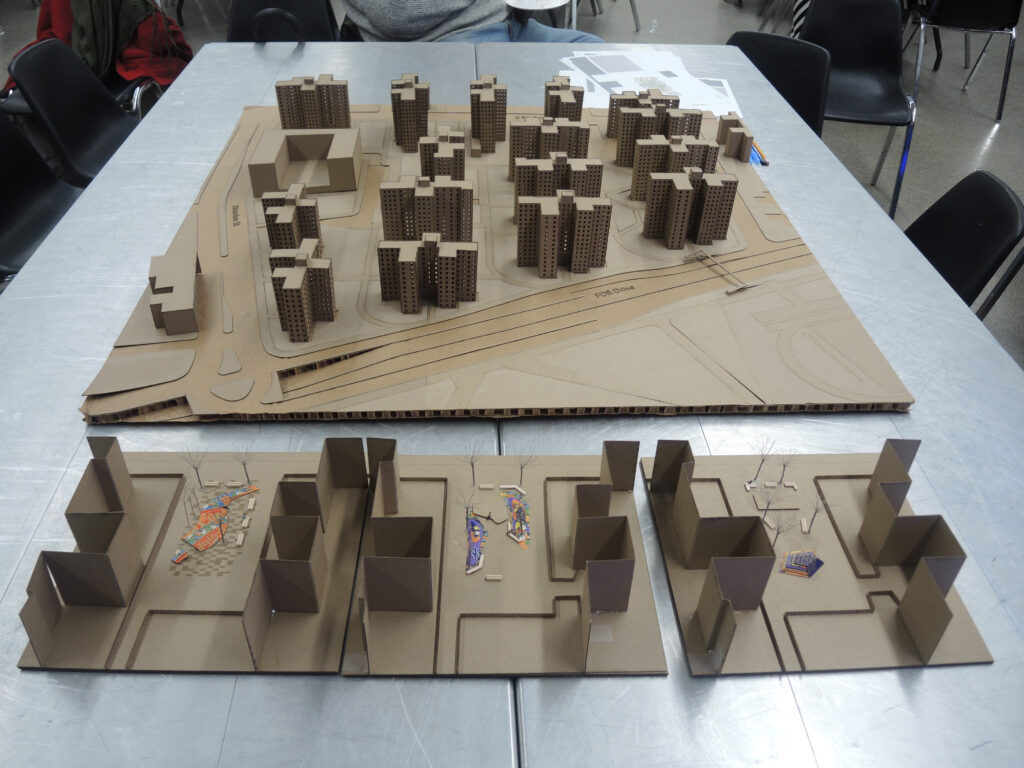
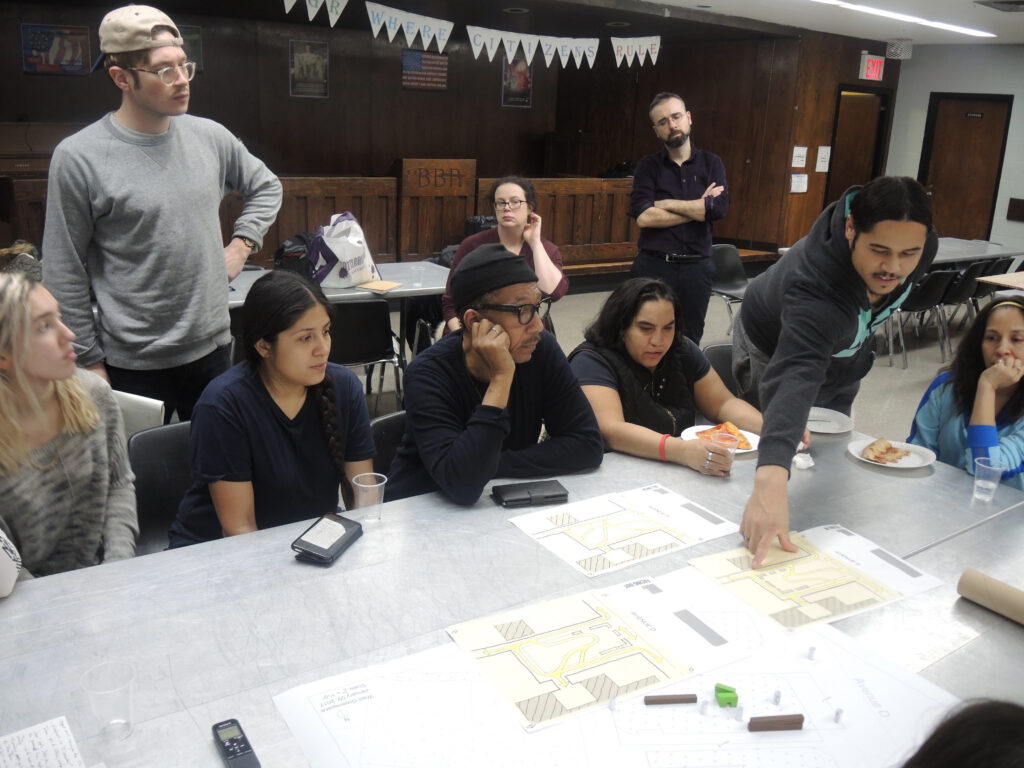
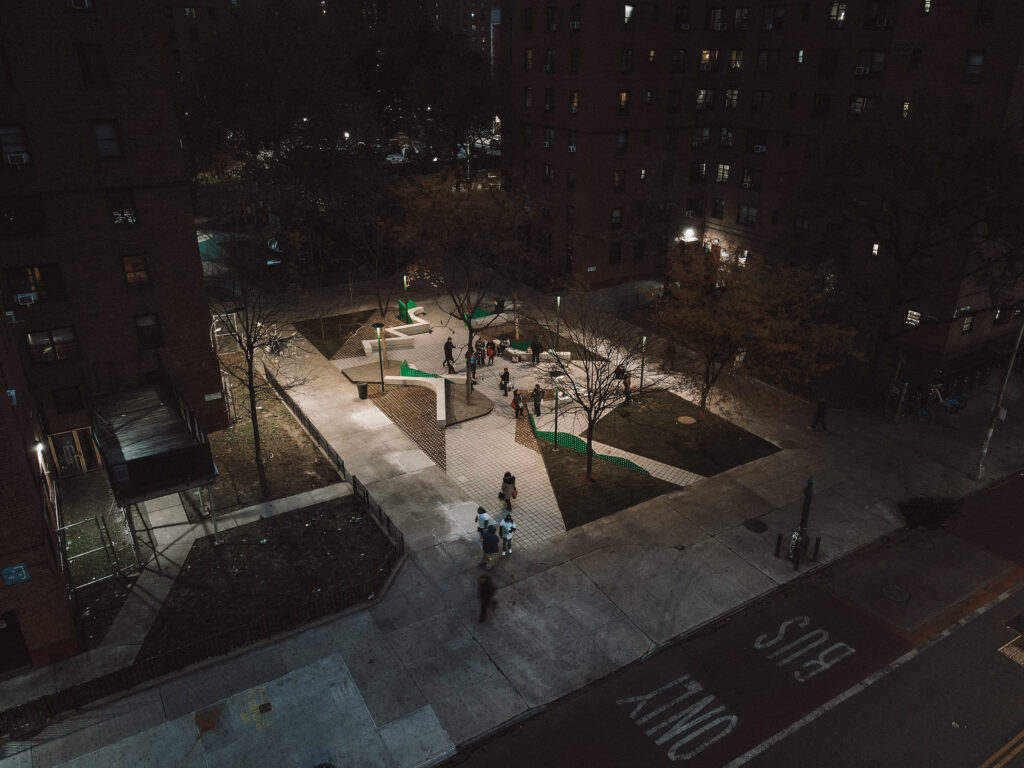
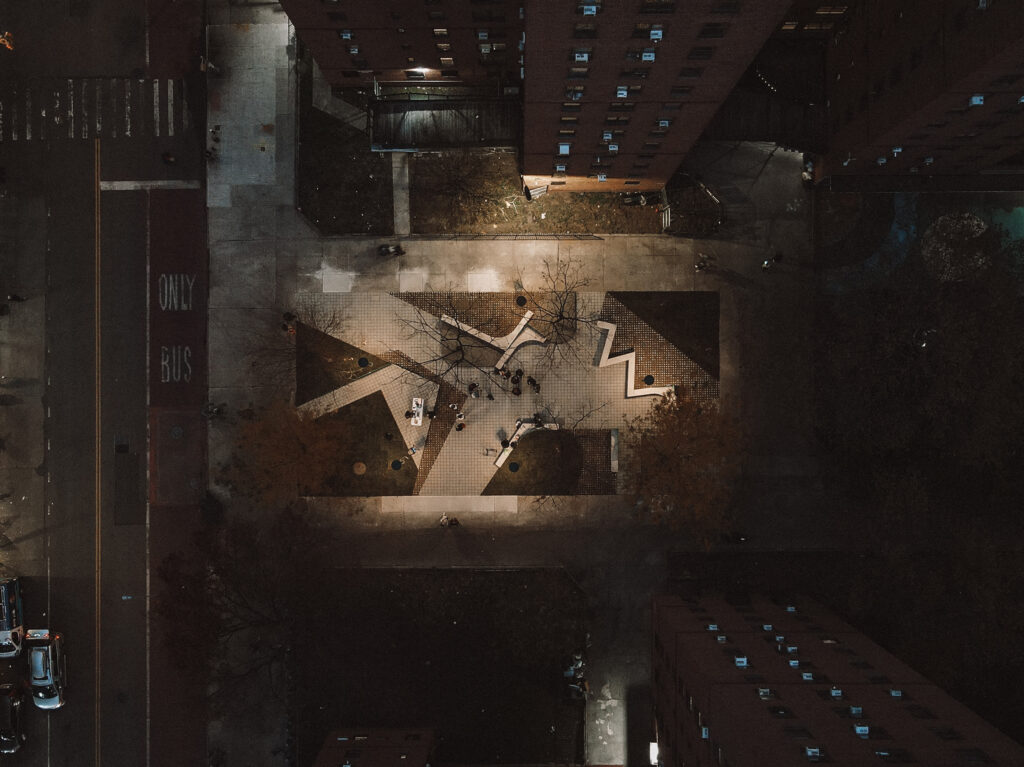
Photo credit for aerial photos and ribbon cutting image: Tameek Williams for Design Trust for Public Space